
Corporate adoption accelerates in 2026
By early 2026, the corporate embrace of Bitcoin has shifted from isolated pilot programs to a standardized component of balance sheet strategy. What began as experimental treasury diversification by a handful of high-risk firms has matured into a structured approach adopted by a broader cohort of public companies seeking inflation hedging and long-term value preservation.
The scale of this accumulation is now significant. As of April 2, 2026, public companies collectively held approximately 1.16 million BTC, according to data from BitcoinTreasuries. This aggregate holding represents a substantial portion of the total circulating supply, signaling that institutional capital has moved beyond speculation and is now treating Bitcoin as a permanent reserve asset. The narrative has evolved from "if" to "how much," with treasury committees increasingly benchmarking their exposure against peer groups and macroeconomic indicators.
This acceleration was further underscored by the February 2026 "Bitcoin for Corporations" conference in Las Vegas, which brought together treasury leaders to formalize best practices for on-chain custody, accounting treatment, and risk management. The event highlighted a growing consensus that Bitcoin is no longer a fringe asset but a legitimate tool for corporate financial engineering. As companies refine their strategies, the focus has shifted toward optimizing holding periods and integrating Bitcoin into broader capital allocation frameworks.
To contextualize the asset's performance during this period of increased corporate adoption, the following chart illustrates Bitcoin's price action and volatility trends.
Strategy Leads Aggressive Accumulation
Strategy (formerly MicroStrategy) remains the dominant force in the Bitcoin corporate treasury sector, maintaining a high-conviction stance that distinguishes it from traditional corporate cash management. The company’s approach is defined by continuous, large-scale acquisition rather than passive holding, effectively treating Bitcoin as a non-negotiable reserve asset. This strategy has allowed the firm to outpace competitors in total holdings and influence market liquidity during key accumulation phases.
The most recent major acquisition underscores the scale of this commitment. On April 27, 2026, Strategy purchased approximately 3,376 Bitcoin for roughly $255 million. This transaction was not funded through idle cash reserves but was executed through the sale of approximately 1.45 million shares of its convertible notes. This mechanism highlights a sophisticated capital structure where debt instruments are leveraged to acquire hard assets, a tactic that amplifies returns when the underlying asset appreciates but also increases financial leverage risks.
This aggressive accumulation model relies on a cyclical funding strategy. By issuing convertible notes or selling equity at favorable terms, the company raises capital specifically to buy Bitcoin. This creates a feedback loop where the company’s stock performance is tightly correlated with Bitcoin’s price action. While this strategy has generated significant value for shareholders during bull markets, it requires constant access to capital markets and a high tolerance for volatility. The April 2026 purchase demonstrates that despite market fluctuations, the firm’s primary directive remains uninterrupted accumulation.
Custody models define risk profiles
The decision between institutional custodians and self-custody is the primary determinant of a corporate Bitcoin treasury's risk profile. This choice is not merely technical; it is a fundamental governance decision that dictates how a company manages counterparty risk, regulatory compliance, and operational security.
Institutional custody involves third-party providers, such as BitGo or Coinbase Custody, which hold the private keys. This model offers regulatory clarity and insurance coverage, making it the standard for publicly traded companies seeking to minimize operational complexity. However, it introduces counterparty risk—the possibility that the custodian could be hacked, frozen by regulators, or fail financially.
Self-custody requires the company to manage its own private keys, typically using multi-signature wallets or hardware security modules. This approach eliminates counterparty risk and provides absolute control over assets, aligning with the core ethos of Bitcoin. Yet, it demands significant internal expertise and places the entire burden of security on the corporation. A single operational error can lead to irreversible loss.
The following table compares these two primary models across critical dimensions.
For most publicly traded entities, institutional custody remains the pragmatic choice due to established audit trails and insurance frameworks. However, as internal security infrastructure improves, a growing number of companies are adopting hybrid models, keeping a portion of reserves in self-custody to mitigate long-term counterparty exposure.
Digital credit unlocks treasury liquidity
A new financial layer is emerging where companies use Bitcoin holdings as collateral for credit lines, creating a significant opportunity without selling assets. This "digital credit" mechanism allows corporations to access liquidity while maintaining their BTC exposure.
Executives at Bitcoin treasury firms outlined a $3 trillion long-term opportunity in BTC-backed digital credit at the Consensus conference. This scaling trend represents a shift from simple holding to active treasury management using Bitcoin as a foundational asset.
By leveraging BTC as collateral, companies can obtain credit lines that provide operational flexibility. This approach avoids the tax implications and market timing risks associated with selling Bitcoin, preserving the long-term value of the treasury position.
Metrics for evaluating treasury firms
Assessing a Bitcoin treasury company requires looking beyond the headline holdings number. A CFO or investor must evaluate how much Bitcoin the firm actually controls, the cost basis of those assets, and the structural integrity of the balance sheet. These metrics separate strategic long-term holders from speculative traders.

Public companies must disclose holdings in their 10-K or 10-Q filings. Cross-reference these figures against independent trackers like BitcoinTreasuries.net to ensure the reported BTC matches on-chain reality. Discrepancies here signal potential accounting errors or liquidity issues.
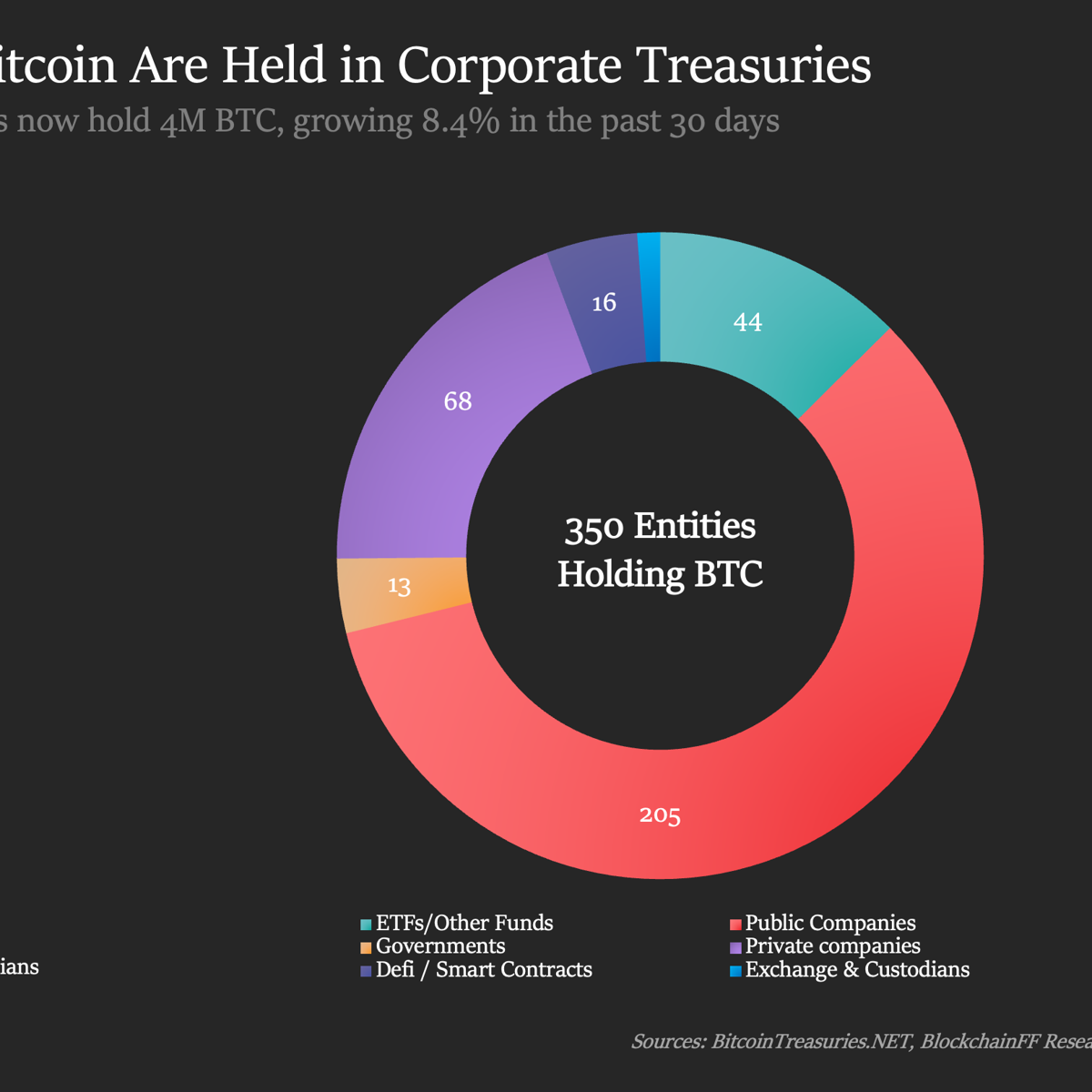
Calculate the average purchase price of the treasury’s Bitcoin. A low average cost basis provides a significant margin of safety during market downturns. Compare this metric against the current spot price to determine unrealized gains and the company’s effective leverage ratio.

Bitcoin is volatile; ensure the company has sufficient fiat liquidity to cover short-term debt and operational expenses. Evaluate the debt-to-equity ratio and free cash flow to confirm that treasury holdings are not being used as collateral for risky, short-term borrowing.
The health of a corporate Bitcoin treasury is ultimately defined by its ability to withstand volatility without compromising operational stability. Use these metrics to filter out companies that treat Bitcoin as a passive asset versus those managing it as a core strategic reserve.
No comments yet. Be the first to share your thoughts!