

In 2026, DAOs stand at the forefront of decentralized finance, transforming their treasuries into sophisticated mini hedge funds. With tokenized U. S. Treasuries reaching a market capitalization of $8.86 billion, a staggering 125% increase from last year, these organizations are prioritizing DAO treasury risk management to navigate volatility while chasing sustainable yields. No longer content with idle stablecoins, forward-thinking DAOs deploy on-chain treasury strategies 2026 that blend DeFi innovation with institutional-grade safeguards, ensuring capital efficiency and community-aligned growth.
Tokenized Treasuries: The Anchor for DAO Stability
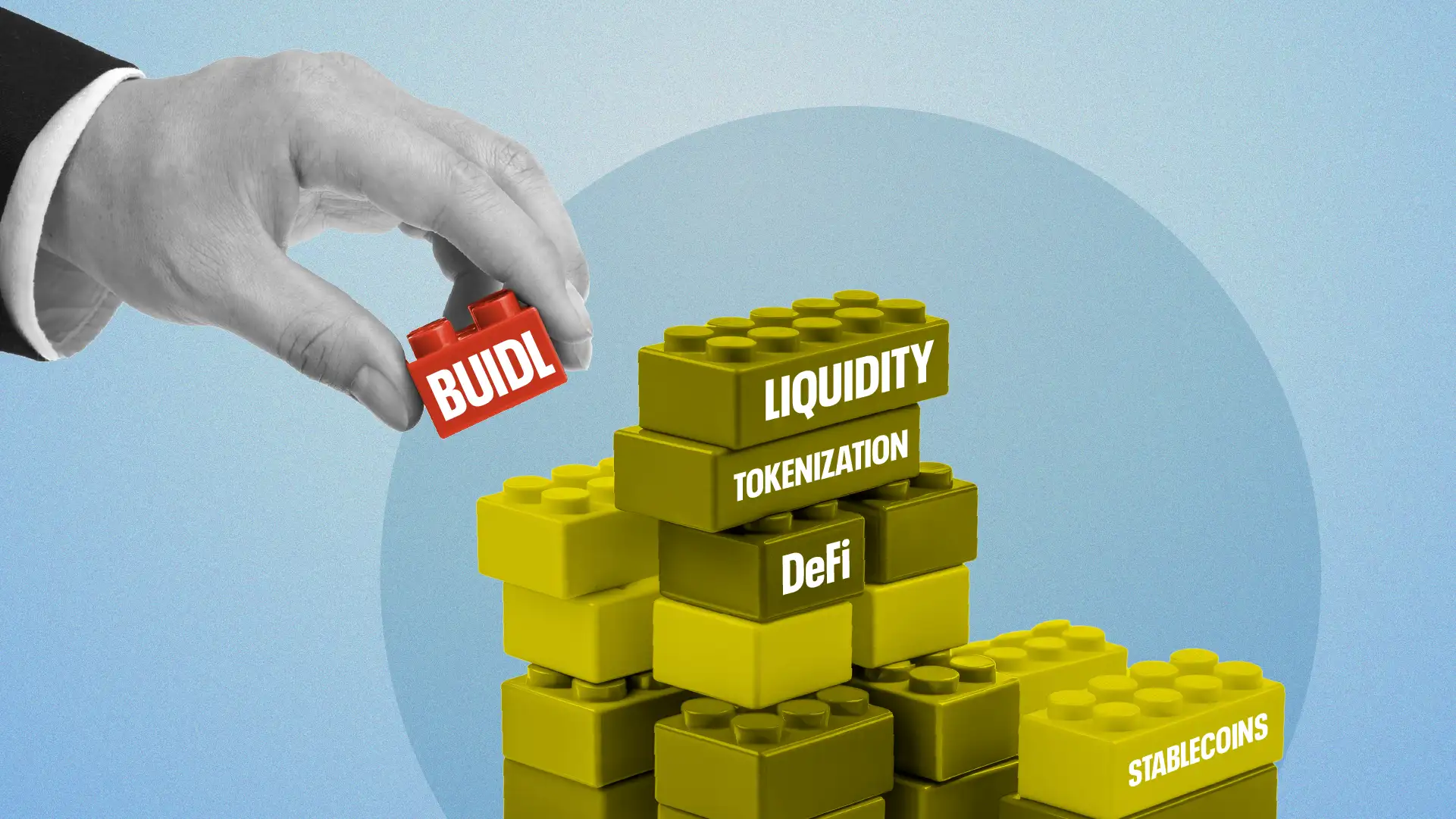
Picture this: your DAO's treasury, once exposed to crypto's wild swings, now draws predictable income from U. S. government-backed assets on-chain. Tokenized U. S. Treasuries like BlackRock's BUIDL, Franklin Templeton's BENJI, and Ondo Finance's USDY have become staples in DAO treasuries hedge funds. These instruments deliver stable yields, often 4-5%, shielding against market downturns while funding operations and initiatives. The surge to $8.86 billion in market cap underscores their appeal, as DAOs allocate 20-30% of treasuries here for ballast.
Comparison of Top Tokenized U.S. Treasuries (2026)
| Token | Issuer | Yield (APY) | TVL | Supported Chains | Key Risks |
|---|---|---|---|---|---|
| BUIDL | BlackRock | 5.2% | $4.2B | Ethereum, Polygon | Custodial risk (centralized issuer), Limited chain interoperability |
| BENJI | Franklin Templeton | 5.1% | $2.1B | Ethereum, Solana, Aptos | Regulatory exposure, Moderate liquidity on secondary markets |
| USDY | Ondo Finance | 5.3% | $1.8B | Ethereum, Solana, Sui, Aptos, Mantle | Smart contract vulnerabilities, Higher chain fragmentation risks |
This shift isn't mere trend-following; it's a calculated pivot toward DAO capital efficiency. By parking funds in these vaults, DAOs sidestep depegging scares plaguing traditional stablecoins, as highlighted in recent analyses of stablecoin yield strategies. Yet, balance remains key; over-reliance could stifle upside from riskier DeFi plays.
Top 5 Benefits of Tokenized U.S. Treasuries
- 1. Government-backed stability: Instruments like BlackRock's BUIDL, Franklin Templeton's BENJI, and Ondo Finance's USDY provide U.S. government backing, with market cap at $8.86B—empowering DAOs to weather crypto storms confidently.

- 2. On-chain liquidity: Trade 24/7 on blockchain platforms with instant settlement, turning DAO treasuries into fluid assets ready for any opportunity without traditional market constraints.

- 3. Yield without volatility: Earn predictable yields from short-term U.S. Treasuries, decoupling returns from crypto swings—ideal for sustainable DAO growth in volatile 2026 markets.
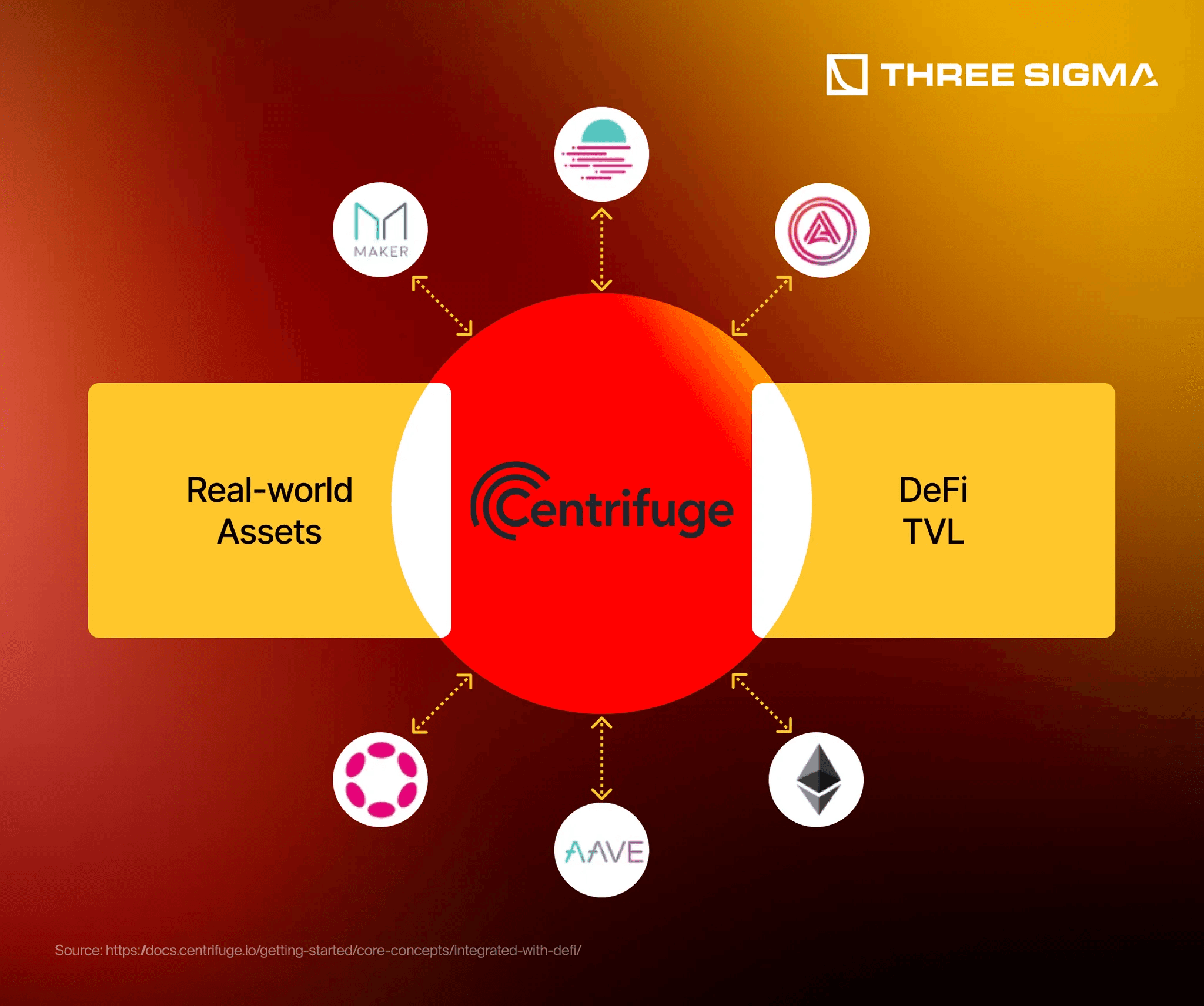
- 4. Easy integration with vaults: Seamlessly plug into DeFi vaults like those from Sky Protocol or Summer.fi, automating yield strategies and enhancing treasury efficiency for mini-hedge fund operations.
- 5. Compliance-friendly for growth: Institutional-grade products from BlackRock and Franklin Templeton meet regulatory standards, enabling DAOs to scale responsibly while attracting institutional capital.
AI-Powered Allocation: Smarter, Faster Decisions
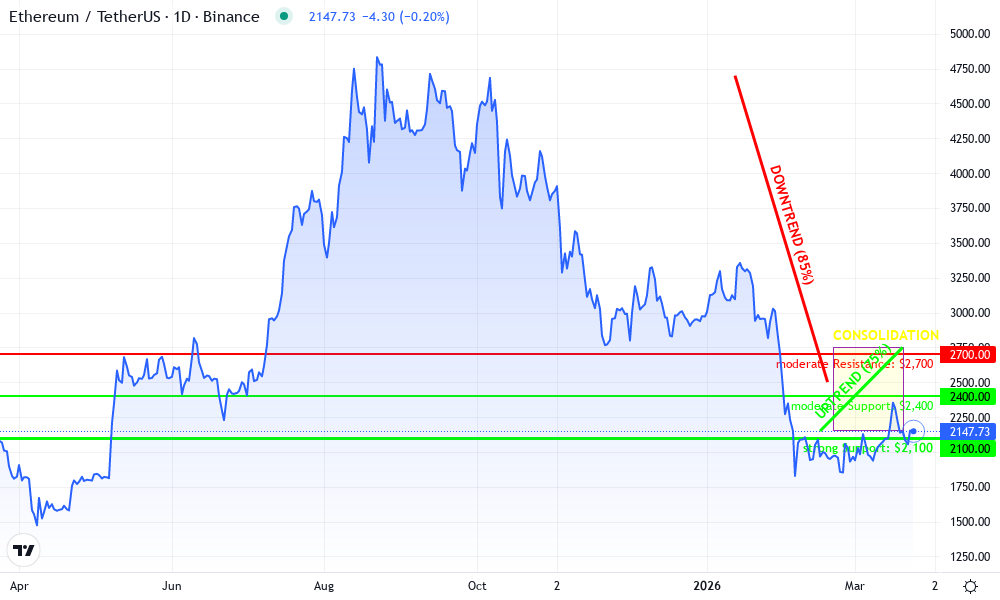
Ethereum Technical Analysis Chart
Analysis by Chloe Franklin | Symbol: BINANCE:ETHUSDT | Interval: 1W | Drawings: 6
Technical Analysis Summary
To annotate this ETHUSDT chart in my balanced hybrid style, start with a primary downtrend line (trend_line tool) connecting the January 2026 peak at approximately $4,700 (2026-01-12) to the mid-February swing high around $2,500 (2026-02-18), extending to the current March price action for confluence. Add a secondary short-term uptrend line (trend_line) from the February low at $2,150 (2026-02-15) to the recent March high of $2,750 (2026-03-20). Draw horizontal lines (horizontal_line) at key support $2,100 (strong) and $2,400 (moderate), and resistance at $2,700 (moderate) and $3,000 (weak prior level). Use a rectangle (rectangle) to highlight the late February to mid-March consolidation zone between $2,150-$2,750. Mark a fib_retracement from the January high to February low for potential retracement levels at 38.2% ($2,900) and 50% ($3,400). Add arrow_mark_up at the recent volume spike near the March bounce for bullish confirmation, and text/callout notes for MACD bullish divergence and volume accumulation patterns. Place long_position order_line near $2,450 entry with stop_loss at $2,100. This setup emphasizes responsible risk management aligned with medium tolerance, focusing on long-term growth in a 2026 DeFi landscape.
Risk Assessment: medium
Analysis: Volatile correction phase with supportive fundamentals from 2026 DeFi trends (tokenized treasuries, AI management), but extended downtrend requires confirmation; medium tolerance suits scaled entries
Chloe Franklin's Recommendation: Cautious long for long-term holders; diversify with stablecoin vaults per DAO best practices—manage with foresight
Key Support & Resistance Levels
📈 Support Levels:
- $2,100 - Strong volume-backed low from mid-February, key DAO accumulation zone strong
- $2,400 - Minor support from late February retest moderate
📉 Resistance Levels:
- $2,700 - Recent March high, initial hurdle for breakout moderate
- $3,000 - Psychological level aligning with 38.2% fib retracement weak
Trading Zones (medium risk tolerance)
🎯 Entry Zones:
- $2,450 - Bounce from moderate support with volume confirmation, medium-risk long for aligned portfolios medium risk
🚪 Exit Zones:
- $2,800 - Profit target at resistance confluence with fib level 💰 profit target
- $2,100 - Stop loss below strong support to protect capital 🛡️ stop loss
Technical Indicators Analysis
📊 Volume Analysis:
Pattern: bullish divergence - increasing on recent upmove after decline
Volume spikes at February low and March bounce indicate accumulation by institutions/DAOs
📈 MACD Analysis:
Signal: bullish crossover emerging
MACD line crossing above signal with histogram expansion, supporting short-term reversal
Applied TradingView Drawing Utilities
This chart analysis utilizes the following professional drawing tools:
Disclaimer: This technical analysis by Chloe Franklin is for educational purposes only and should not be considered as financial advice. Trading involves risk, and you should always do your own research before making investment decisions. Past performance does not guarantee future results. The analysis reflects the author's personal methodology and risk tolerance (medium).
Layered Defenses: Smart Contracts and Multi-Sig Essentials[/h2>
Risk management thrives on layers, starting with smart contract cover as a non-negotiable hedge. In 2026, DAOs treat this like insurance premiums in traditional funds, embedding coverage against exploits into core operations. Paired with multi-signature wallets like Safe, which demand multi-party approvals, these primitives slash unauthorized access risks by over 90%.
Contingency plans further fortify positions: predefined responses to governance attacks or crashes ensure swift recovery. Diversifying into stablecoin hedge vaults adds automated buffers against depegs, maintaining liquidity when markets falter. This proactive stance, drawn from best practices in DeFi vaults and institutional stablecoin strategies, positions DAOs not just to survive, but to capitalize on uncertainty.
By weaving these advanced risk management strategies into their fabric, DAOs evolve beyond speculative entities into enduring powerhouses, motivating stewards to invest with purpose and foresight.
AI isn't just a buzzword in 2026; it's the nervous system for DAO treasuries hedge funds, enabling autonomous rebalancing that humans can't match for speed or precision. These systems scan real-time data from DeFi protocols, predict depegs via machine learning models trained on historical volatility, and shift allocations between stablecoin vaults, tokenized treasuries, and yield farms. Imagine a DAO treasury automatically dialing back exposure to a governance token showing stress-test red flags, capping drawdowns at 5% while boosting APYs by 2-3%. This isn't speculation; it's foresight baked into code, aligning short-term tactics with long-term community mandates.
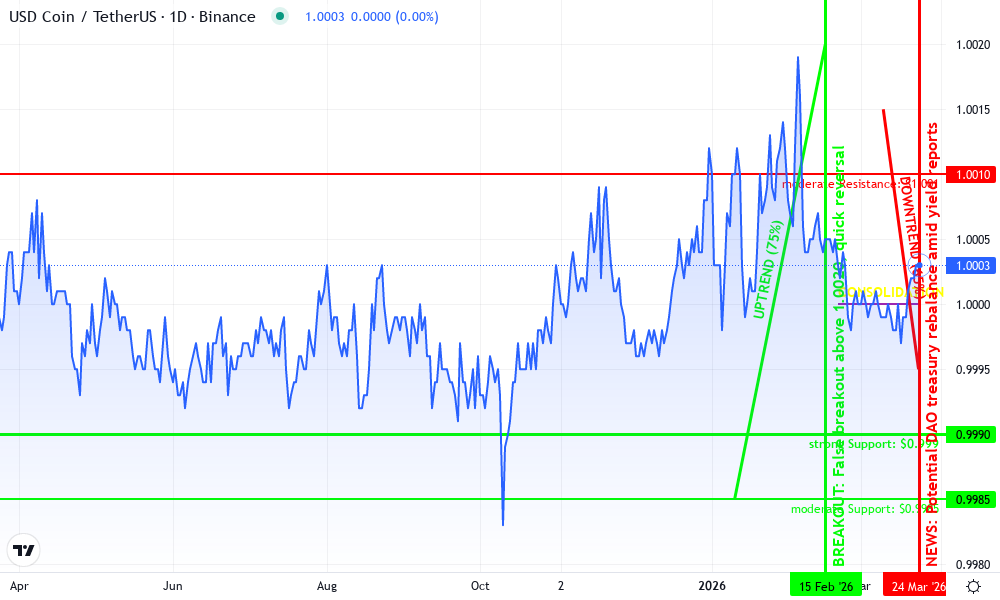
USD Coin Technical Analysis Chart
Analysis by Chloe Franklin | Symbol: BINANCE:USDCUSDT | Interval: 1W | Drawings: 8
Technical Analysis Summary
As Chloe Franklin, my balanced hybrid approach emphasizes sustainable price stability for USDCUSDT, ideal for DAO treasuries seeking low-volatility yield. On this 2026 chart, draw horizontal lines at key support (0.9990, strong) and resistance (1.0010, moderate) using 'horizontal_line'. Connect the minor uptrend from early January low to mid-February peak with 'trend_line' (uptrend). Mark the recent consolidation range from 2026-02-20 to present with 'rectangle'. Add 'callout' for volume spike on 2026-03-01 dip. Use 'fib_retracement' from recent high (1.0020) to low (0.9985) for potential retracement levels. Place 'long_position' entry at 0.9995 and 'short_position' caution above 1.0015. Annotate MACD bearish crossover with 'arrow_mark_down' near 2026-03-15. Highlight accumulation zone early chart with 'date_price_range'. Vertical line for potential news event on 2026-03-24 using 'vertical_line'. Text notes for risk-managed yield strategies.
Risk Assessment: low
Analysis: USDC's proven peg resilience in 2026 DeFi ecosystem, low volatility suits medium tolerance; monitor for systemic stablecoin risks
Chloe Franklin's Recommendation: Hold long for sustainable yields in tokenized Treasuries and hedge vaults, aligning with responsible DAO strategies
Key Support & Resistance Levels
📈 Support Levels:
- $0.999 - Strong peg floor tested multiple times, volume-backed strong
- $0.999 - Secondary support from early-year low moderate
📉 Resistance Levels:
- $1.001 - Immediate overhead resistance, frequent rejections moderate
- $1.002 - Recent swing high, premium zone weak
Trading Zones (medium risk tolerance)
🎯 Entry Zones:
- $1 - Bounce from strong support for yield carry, aligns medium risk low risk
- $1.001 - Break above peg for short-term premium capture medium risk
🚪 Exit Zones:
- $1.001 - Profit target at resistance 💰 profit target
- $0.998 - Stop loss below key support 🛡️ stop loss
Technical Indicators Analysis
📊 Volume Analysis:
Pattern: Increasing on dips, confirming support buys
Volume spikes on downside wicks indicate accumulation by DAOs
📈 MACD Analysis:
Signal: Bearish crossover in late March
MACD histogram contracting, signaling potential further peg test
Applied TradingView Drawing Utilities
This chart analysis utilizes the following professional drawing tools:
Disclaimer: This technical analysis by Chloe Franklin is for educational purposes only and should not be considered as financial advice. Trading involves risk, and you should always do your own research before making investment decisions. Past performance does not guarantee future results. The analysis reflects the author's personal methodology and risk tolerance (medium).
From my vantage as a portfolio analyst, this tech tempers the greed often chasing stablecoin yields, as noted in institutional outlooks. DAOs like those leveraging Sky Protocol's ecosystem, projecting $611 million in revenue, use AI to future-proof against the critical forces of AI policy shifts and tokenization waves. Yet, I caution balance: over-automation risks opaque black boxes, so hybrid human oversight remains essential for value-aligned decisions.
Layered Defenses: Smart Contracts and Multi-Sig Essentials
Think of smart contract cover as the airbags in your DAO's treasury vehicle - always on, never optional. In 2026, protocols bundle this coverage into vaults, hedging exploits that could wipe billions, much like traditional funds insure against black swan events. Combine it with multi-signature wallets like Safe, where 3-of-5 approvers must align for moves, and you've slashed single-point failures. Data shows these setups cut breach risks by over 90%, freeing treasuries for bold on-chain treasury strategies 2026.
Contingency Planning: Preparing for the Inevitable
Markets crash, governance tokens pump then dump, stablecoins wobble - DAOs that thrive pre-write the playbook. Robust contingency plans outline triggers like 10% depegs or oracle failures, assigning response squads with clear remits: isolate funds, invoke emergency multisigs, audit post-mortem. This isn't paranoia; it's maturity, echoing how institutions manage stablecoin liquidity amid systemic relevance. Diversification into stablecoin vaults DAOs love, like curated DeFi options overtaking legacy yields, amplifies resilience.
Comparison of Top Stablecoin Hedge Vaults for DAOs
| Vault Name | APY Range | Depeg Protection Mechanism | TVL | Supported Chains |
|---|---|---|---|---|
| Yearn Finance Stable Vault | 6-8% | AI-Optimized Hedging with Perpetual Swaps & Dynamic Rebalancing | $2.1B | Ethereum, Arbitrum, Base |
| Convex Finance crvUSD Hedge Vault | 7-10% | Convex-Boosted Curve LP with Embedded Depeg Insurance | $1.9B | Ethereum, Optimism, Base |
| Summer.fi sUSDS Vault | 5-7% | Sky Protocol Integration & Smart Contract Cover | $900M | Ethereum, Gnosis |
| Morpho Blue Stablecoin Vault | 5.5-8.5% | Risk-Tranched P2P Lending with Automated Collateral Swaps | $1.4B | Ethereum, Base, Arbitrum |
| Pendle Stable Yield Hedge Vault | 6-9% | Fixed-Rate Yield Tokenization & Options-Based Protection | $1.1B | Ethereum, Arbitrum |
Stablecoin Hedge Vaults: The Volatility Buffer
Stablecoins dominate as on-chain cash, but depegs remind us nothing's sacred. Enter hedge vaults: automated fortresses deploying low-risk tokenized T-bills alongside lending and restaking, as outlined in 2026 yield guides. DAOs allocate 15-25% here, automating exits during turbulence while capturing 4-8% yields. Summer. fi's DAO-managed vaults exemplify this product-market fit, blending lending, staking, and structured products for DAO capital efficiency. Institutions chase similar strategies for payments and settlement, validating the approach.
Layering these strategies - from AI smarts to hedge vaults - crafts treasuries that weather storms and seize opportunities. DAOs aren't gambling anymore; they're stewarding capital with the discipline of hedge funds, yet infused with decentralized ethos. This evolution motivates me: by prioritizing risk alongside return, communities build legacies that endure, turning volatility into velocity for purposeful growth.




No comments yet. Be the first to share your thoughts!