
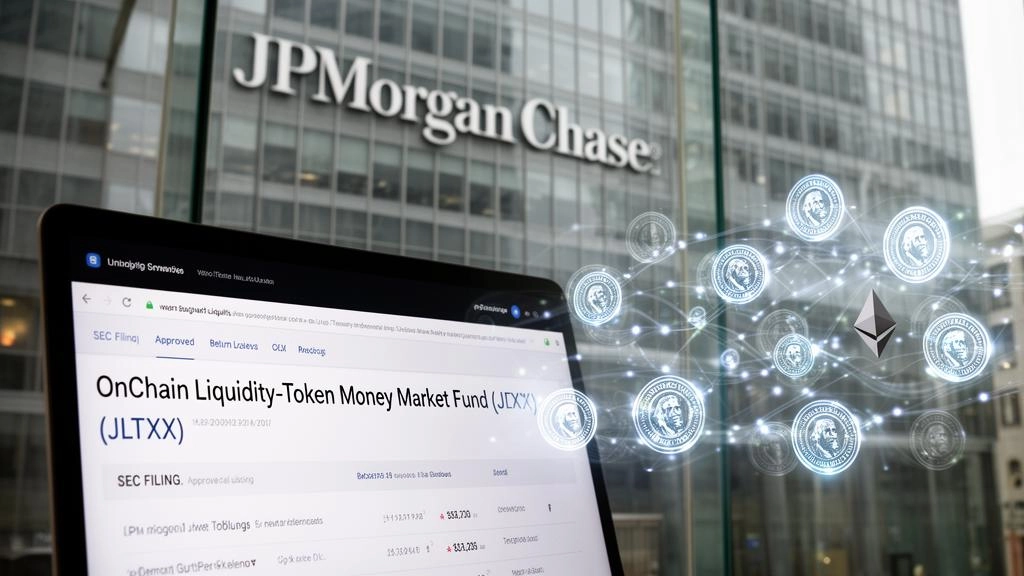
What is on-chain treasury management?
On-chain treasury management uses distributed ledger technology to oversee an organization’s liquidity, cash flows, and financial assets. It moves beyond traditional banking ledgers by recording transactions directly on a blockchain, allowing for real-time visibility and automated execution through smart contracts.
This approach treats digital assets as core balance sheet items. Companies use it to manage stablecoin yields, hold Bitcoin or Ethereum as reserves, and execute cross-border payments without relying on slow intermediary banks. The shift is driven by the need for faster settlement and greater transparency in how corporate funds are stored and deployed.
Treasury operations on-chain are not just about holding crypto. They involve integrating digital asset custody with existing financial infrastructure. This requires robust security protocols to protect private keys and compliance frameworks to navigate evolving regulations like SEC guidance on digital securities.
For organizations considering this transition, the primary challenge is balancing the efficiency of blockchain technology with the regulatory scrutiny of traditional finance. Understanding the difference between "onchain" (adjective) and "on chain" (adverb) is a small but important step in adopting the correct terminology for legal and technical documentation.
On-chain treasury management choices that change the plan
Treasury optimization involves managing a company, protocol, or institution's cash and investments to maximize returns while minimizing risk. When moving these functions on-chain, you are not just changing the settlement layer; you are changing the risk profile entirely. The shift to digital assets offers transparency and decentralization, as all transactions are recorded on the blockchain, but it introduces new vectors for loss that traditional finance does not face.
The primary tradeoff lies between yield generation and capital preservation. On-chain stablecoins can offer yields significantly higher than traditional money market funds, but this income often comes from lending protocols or liquidity pools that lack the deposit insurance of FDIC coverage. Conversely, holding assets in cold storage or multi-signature wallets eliminates counterparty risk but sacrifices liquidity and yield potential. You must decide whether your treasury’s primary goal is growth or preservation.
| Factor | On-Chain Treasury | Traditional Treasury |
|---|---|---|
| Settlement Speed | Seconds to minutes | Days (T+1/T+2) |
| Transparency | Real-time public ledger | Private quarterly reports |
| Yield Potential | High (DeFi protocols) | Low (Money markets) |
| Regulatory Clarity | Evolving (SEC scrutiny) | Established frameworks |
| Security Risk | Smart contract/hacks | Fraud/Insider threat |
Security is the most critical differentiator. Traditional treasuries rely on institutional trust and legal recourse. On-chain treasuries rely on code and cryptographic proof. A smart contract vulnerability or a compromised private key can result in irreversible loss. This requires robust treasury management systems that enforce multi-signature approvals and time-locks, adding operational complexity that traditional banks handle automatically.
The decision ultimately depends on your organization’s risk appetite and regulatory exposure. If you require immediate liquidity and high yield, on-chain solutions offer superior efficiency, provided you can manage the security overhead. If regulatory certainty and capital preservation are paramount, traditional structures remain safer despite their slower settlement times.
Choose the next step
Treasury management oversees an organization's liquidity, cash flows, and financial assets. Moving these functions onchain requires a structured decision framework that balances regulatory compliance with yield efficiency. The SEC's evolving stance on digital assets and stablecoin yields demands a clear path forward.
1. Assess regulatory exposure
Start by mapping your current holdings against SEC guidance on digital assets. Determine which assets qualify as securities and which fall under commodity or currency classifications. This distinction dictates your reporting obligations and custodial requirements. Misclassification can lead to significant compliance penalties, so prioritize legal review before execution.
2. Select the right stablecoin yield strategy
Not all stablecoin yields are created equal. Evaluate the underlying mechanism—whether it is algorithmic, collateralized, or protocol-based. Prioritize strategies with transparent reserve attestations and audited smart contracts. Higher yields often correlate with higher smart contract risk, so balance potential returns against the stability of the underlying asset.
3. Evaluate treasury management systems
Compare onchain treasury platforms based on security, integration capabilities, and reporting features. Look for systems that offer multi-signature wallets, automated compliance checks, and real-time liquidity dashboards. The top 5 treasury management systems typically differ in their support for specific blockchains and their ability to integrate with traditional ERP systems.
4. Implement security protocols
Secure your digital assets with multi-party computation (MPC) or multi-signature wallets. Establish clear approval workflows for transactions exceeding a set threshold. Regularly audit your smart contract interactions and maintain a cold storage strategy for long-term holdings. Security is not a one-time setup but an ongoing operational discipline.
5. Monitor and report
Set up automated reporting to track performance against your treasury goals. Monitor yield rates, gas fees, and regulatory changes. Use data to refine your strategy and adjust allocations as needed. Transparency is key to maintaining stakeholder trust and ensuring compliance with evolving standards.
Watchouts: Weak Options and Misleading Claims
Not every digital asset strategy fits a corporate treasury. Several approaches look attractive in headlines but fail under scrutiny. Avoid these common pitfalls before committing capital.
Yield Farming as Treasury Strategy
High-yield farming protocols often promise double-digit returns. These returns usually come from volatile token emissions, not sustainable revenue. Treasuries require stability, not speculation. Treating yield farming as a core treasury function exposes the organization to sudden value erosion. Stick to regulated or deeply audited options with transparent revenue sources.
Unaudited Smart Contracts
Some platforms advertise "high yields" without third-party audits. Smart contract risk is binary; a single vulnerability can drain funds. Never deploy treasury capital into unaudited code. Verify audit reports from reputable firms like OpenZeppelin or Trail of Bits. Check for active bug bounty programs. If the code isn't battle-tested, the yield isn't worth the risk.
Illiquid Stablecoin Pools
Certain stablecoin pools offer attractive rates but lock capital for extended periods. Treasury management requires liquidity to meet operational needs. Illiquid assets cannot cover payroll or vendor payments. Always check withdrawal schedules and slippage parameters. If you can't access your funds within 24 hours, it's not a treasury asset—it's a locked investment.
On-chain treasury management: what to check next
Treasury teams are shifting from traditional banking rails to distributed ledger technology to manage liquidity and digital assets. Below are direct answers to the most common questions about on-chain treasury operations, SEC compliance, and stablecoin yields.
These systems differ in their approach to custody and integration. Traditional enterprise treasury management systems (TMS) like Kyriba are beginning to integrate crypto modules, while native digital asset platforms offer deeper on-chain capabilities. The choice depends on whether your priority is seamless fiat-digital bridging or advanced DeFi yield strategies.
No comments yet. Be the first to share your thoughts!