
Why onchain treasury 2026 matters now
The corporate balance sheet is undergoing a structural shift. Traditional cash management, once defined by static deposits and low-yield money market funds, is being replaced by onchain treasury 2026 strategies that integrate digital assets directly into financial operations. This transition is not merely about speculation; it is about efficiency, transparency, and access to new yield mechanisms.
Bitcoin has moved from a speculative asset to a recognized reserve component. Major corporations are beginning to hold Bitcoin alongside traditional currencies, treating it as a hedge against inflation and currency devaluation. This trend is accelerating as institutional infrastructure matures, providing the security and custody solutions required for corporate-grade holdings.
Simultaneously, tokenized real-world assets (RWAs) are opening doors to previously inaccessible yield opportunities. By converting traditional assets like treasury bills or private credit into onchain tokens, companies can access liquidity and yield that were previously locked away or restricted. This convergence of Bitcoin as a reserve asset and tokenized RWAs for yield creates a more dynamic and resilient treasury strategy.
The momentum is visible in early adopters. BitMine Immersion Technologies, led by Tom Lee, has emerged as a prominent example of an ETH treasury strategy in 2026, signaling broader institutional interest in digital asset treasuries. As more companies explore these options, the onchain treasury model is becoming a standard consideration for financial leaders.
This shift represents a fundamental change in how corporations manage their most critical resource: capital. By embracing onchain treasury 2026, companies are positioning themselves to benefit from the efficiencies and opportunities of the digital asset economy.
Bitcoin as a Corporate Reserve Asset
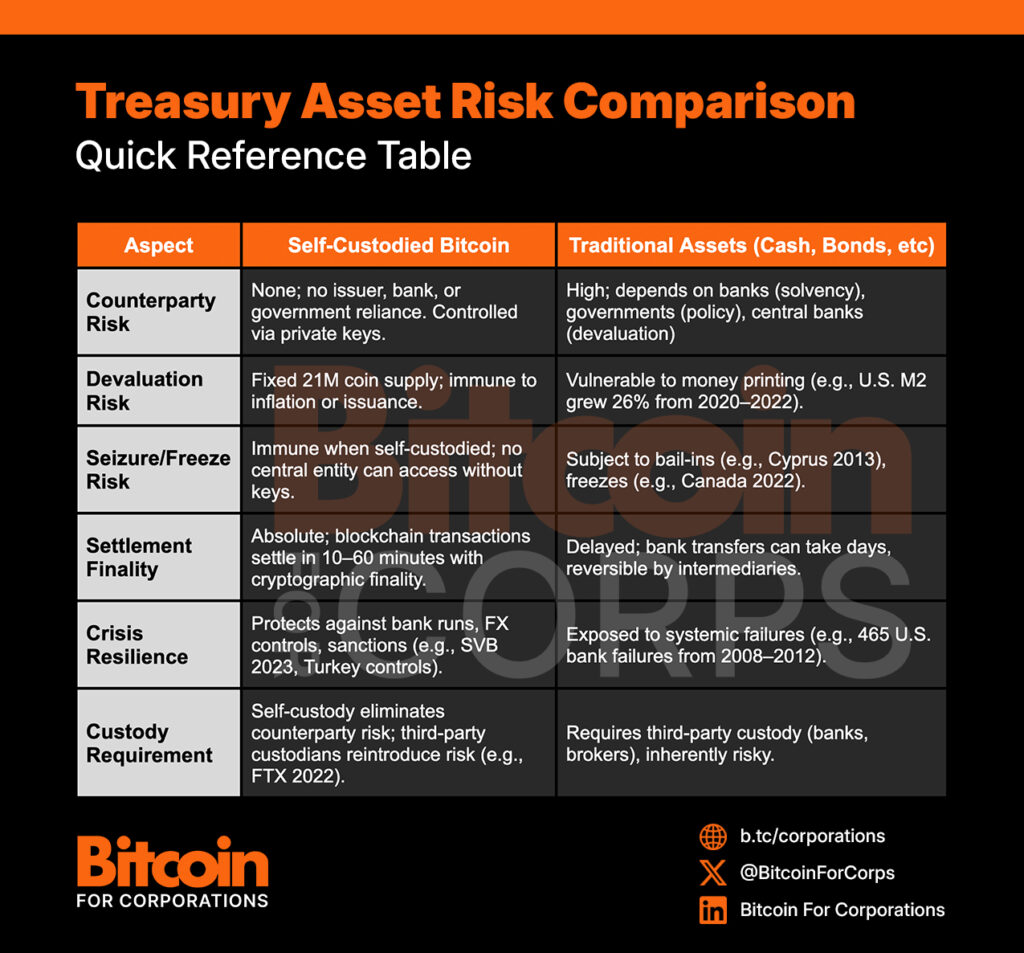
The shift toward treating Bitcoin as a treasury reserve asset has moved from experimental pilot to standard practice in 2026. Corporations are increasingly allocating a small but strategic portion of their balance sheets to Bitcoin, viewing it as a hedge against currency debasement and a diversifier against traditional market volatility. This approach mirrors the early adoption of gold by central banks, but with the added liquidity and programmability of the onchain treasury model.
Early adopters like MicroStrategy have paved the way, but the landscape has broadened significantly. In 2026, companies across various sectors are integrating Bitcoin into their financial strategies, not just as a speculative play but as a long-term store of value. The rationale is clear: Bitcoin’s fixed supply and decentralized nature offer a unique protection against inflationary pressures that traditional fiat currencies cannot match.

The strategy is not without risks, but the potential rewards are compelling. By holding Bitcoin on their balance sheets, companies can signal confidence in the digital asset ecosystem and attract a new class of investors who value innovation and forward-thinking financial management. As the onchain treasury 2026 framework matures, Bitcoin’s role as a corporate reserve asset is likely to become even more entrenched, driving further adoption and institutional interest.
Tokenized treasuries and RWA yields
The onchain treasury 2026 landscape is shifting from speculative crypto yields to stable, real-world asset returns. By tokenizing money market funds and U.S. Treasuries, corporations can now earn yield on-chain that closely mirrors traditional short-dated rates, typically tracking between 4.0% and 4.5% in early 2026. This movement replaces the idle cash of traditional bank deposits with programmable, liquid onchain assets.
The total distributed value of onchain Real World Assets (RWA) reached approximately $31 billion by mid-May 2026, with tokenized Treasuries and equities leading the charge. This growth is driven by the ability to access near real-time liquidity. Recent blockchain pilots have successfully demonstrated cross-border, cross-bank redemptions of tokenized U.S. Treasury funds, enabling 24/7 treasury management that traditional banking hours simply cannot match.
To understand the shift, compare the operational mechanics of traditional deposits against tokenized RWAs:
| Feature | Traditional Bank Deposit | Tokenized RWA | Onchain Treasury 2026 |
|---|---|---|---|
| Yield Source | Bank lending spreads | Short-dated US Treasuries | Direct market rates |
| Liquidity Hours | Business days only | 24/7 settlement | Instant or near-instant |
| Accessibility | Tiered minimums | Fractionalized | Global access |
| Transparency | Quarterly statements | Onchain ledger | Real-time visibility |
Smart contracts for automated liquidity
Traditional corporate treasuries often operate on a 9-to-5 schedule, constrained by banking hours and cross-border settlement delays. In contrast, an onchain treasury 2026 model leverages smart contracts to automate liquidity management, enabling 24/7 access to capital. These self-executing agreements handle settlement, reconciliation, and cross-border payments without manual intervention, significantly reducing operational friction.
By tokenizing real-world assets like U.S. Treasuries, companies can access liquidity pools that remain active around the clock. This shift moves treasury operations from batch processing to continuous settlement. Smart contracts ensure that funds are released only when predefined conditions are met, reducing counterparty risk and eliminating the need for intermediary clearing houses.
Recent industry pilots demonstrate the viability of this approach. A blockchain pilot conducted by PYMNTS successfully completed a near real-time, cross-border redemption of a tokenized U.S. Treasury fund, proving that institutional-grade liquidity can be accessed instantly across jurisdictions.
The integration of smart contracts also streamlines compliance and reporting. Every transaction is immutably recorded on the distributed ledger, providing treasury teams with real-time visibility into cash positions and asset allocations. This transparency reduces the administrative burden of manual audits and allows finance teams to focus on strategic allocation rather than transaction processing.
As the financial infrastructure evolves, the ability to automate liquidity through smart contracts becomes a competitive advantage. Companies that adopt these technologies can respond faster to market opportunities, optimize cash flow, and reduce the costs associated with traditional banking intermediaries.
Steps to build an onchain treasury
Moving to an onchain treasury 2026 model requires a structured shift in how corporate treasuries manage liquidity and risk. This workflow outlines the essential phases for CFOs and finance teams to integrate digital assets securely, compliantly, and efficiently.
Start by establishing clear policy boundaries. Determine which assets fit your risk tolerance—typically Bitcoin for long-term value storage or tokenized money market funds for short-term liquidity. Align this with your existing corporate governance and audit requirements to ensure board-level approval before technical execution begins.
Security is the foundation of digital asset management. Choose a custody solution that offers multi-party computation (MPC) or hardware security modules (HSMs) and provides institutional-grade insurance. Ensure the provider supports the specific blockchains and token standards you intend to use, such as ERC-20 or Solana SPL tokens.

Connect your treasury management system (TMS) or enterprise resource planning (ERP) software to your custody provider via API. This integration allows for automated reconciliation, real-time balance tracking, and seamless transfer of assets between cold storage and operational wallets for daily business needs.
Implement strict Know Your Transaction (KYT) and Anti-Money Laundering (AML) checks for all outgoing payments. Use smart contracts or automated workflows to enforce approval hierarchies, ensuring that large transfers require multi-signature authorization from designated finance officers.
Track asset performance and yield generation in real time. For tokenized money market funds, yields currently track short-dated US Treasury rates, offering roughly 4.0 to 4.5 percent through early 2026. Use on-chain analytics tools to generate auditable reports for internal stakeholders and external regulators.
| Asset Type | Treasury Role | Risk Level |
|---|---|---|
| Bitcoin | Long-term store of value | High |
| Tokenized Money Market Funds | Short-term liquidity | Low |
| Real World Assets (RWAs) | Yield generation | Medium |
By following these steps, your organization can build a robust onchain treasury 2026 infrastructure that balances innovation with the rigorous security standards required in modern corporate finance.
No comments yet. Be the first to share your thoughts!