
What defines an on-chain treasury
An on-chain treasury is a corporate cash management model where assets are held, tracked, and moved directly on a distributed ledger. Rather than relying on opaque bank statements or delayed batch processing, the treasury operates with real-time visibility into every transaction. This shift moves corporate finance from a reactive, backward-looking function to a proactive, data-rich operation.
The defining feature of this model is transparency. Every transaction recorded on the blockchain is immutable and publicly verifiable (or permissioned-verified, depending on the network). For CFOs, this means auditors and regulators can access the same data as the treasury team, reducing reconciliation time and increasing trust. As noted by industry glossaries, on-chain treasuries provide a level of decentralization and transparency that traditional cash management systems struggle to match Kyriba.
Programmability is the second pillar. Through smart contracts, treasury operations can be automated. Payments, settlements, and even complex yield-generating strategies can be executed without manual intervention. This reduces operational overhead and minimizes human error. The treasury becomes less of a siloed department and more of an integrated, code-driven engine connected to the broader digital economy.
Finally, on-chain treasuries enable 24/7 settlement. Traditional banking operates on business days and cut-off times, creating liquidity gaps and settlement risks. On-chain assets settle in minutes or seconds, regardless of the time of day or day of the week. This constant availability allows for more efficient capital utilization and faster response to market opportunities.
Note: "On-chain" refers to assets recorded on a public or permissioned ledger, enabling real-time visibility for auditors and regulators. This is distinct from off-chain activities that merely reference blockchain data.
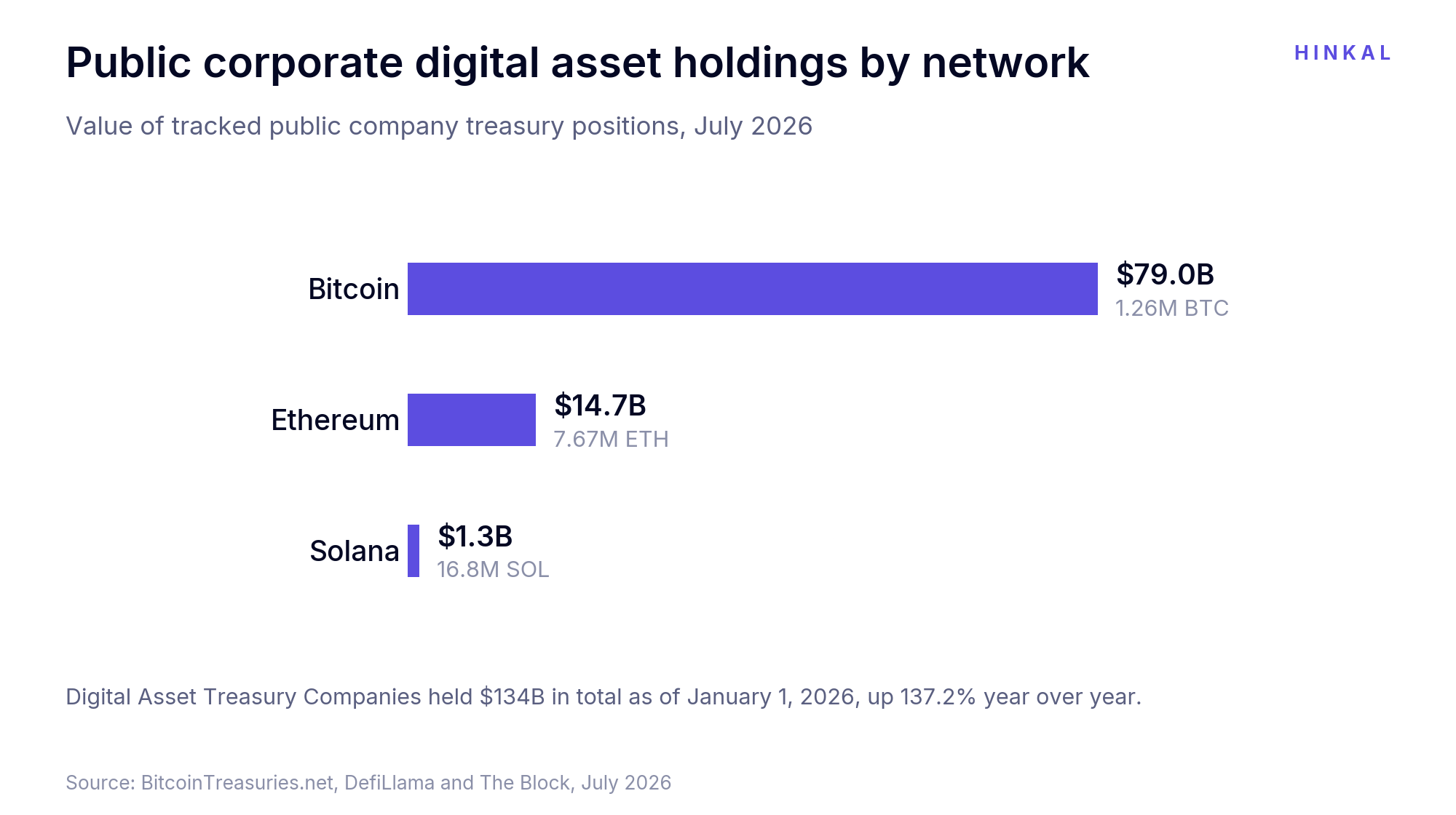
To understand the market context in which these treasuries operate, consider the performance of major digital assets. The volatility and liquidity of these assets directly impact treasury risk management strategies.
The integration of these assets into corporate balance sheets requires a new set of tools and mindsets. It is not just about holding Bitcoin; it is about leveraging the underlying infrastructure to create a more agile, transparent, and efficient financial operation.
Why 2026 is the tipping point for on-chain corporate treasuries
Public companies are moving from experimental pilots to structural adoption of digital asset reserves. This shift is not driven by speculation alone, but by a convergence of regulatory clarity, technological maturity, and macroeconomic necessity. For CFOs, 2026 represents the year where the barriers to entry for on-chain treasury management have dropped enough to justify permanent balance sheet allocation.
Regulatory clarity removes the compliance fog
The primary driver for 2026 adoption is the maturation of the regulatory landscape in key jurisdictions. While the U.S. has seen fragmented state-level approaches, the EU’s Markets in Crypto-Assets (MiCA) regulation is fully operational, providing a clear legal framework for holding and managing digital assets. This clarity allows multinational corporations to standardize their treasury policies across borders without fearing sudden regulatory reversals.
In the United States, the executive focus on digital asset innovation has encouraged federal agencies to provide clearer guidance on accounting treatments and custody requirements. This reduces the legal risk that previously kept many conservative CFOs on the sidelines. When compliance is no longer a guesswork exercise, the business case for on-chain treasuries becomes mathematically sound.
Institutional infrastructure matures
The plumbing for on-chain finance has evolved from boutique custodians to enterprise-grade infrastructure. Fireblocks, Copper, and Anchorage Digital now offer multi-signature custody solutions that meet the same security standards as traditional prime brokers. These platforms provide APIs that integrate directly with existing ERP systems, allowing treasury teams to view digital assets alongside fiat balances in a single liquidity view.
This integration is critical. CFOs do not want to manage a separate, siloed department for crypto assets. The ability to automate reporting, reconcile transactions in real-time, and execute payments via smart contracts makes on-chain treasuries operationally efficient, not just theoretically interesting.
Macro pressures demand new yield sources
With interest rate environments remaining volatile, traditional cash management strategies are yielding lower real returns. Corporations are under pressure to diversify their reserve assets to protect against currency debasement and inflation. Bitcoin, in particular, has emerged as a non-sovereign store of value that does not correlate directly with traditional equity markets.
The combination of regulatory safety rails and institutional-grade custody has made Bitcoin a viable component of a diversified corporate treasury. It acts as a hedge against fiat currency instability, offering a potential long-term appreciation that traditional money market funds cannot match.
The window for early adoption is closing
Early movers are already reaping the benefits of lower transaction fees, faster settlement times, and improved transparency. As more companies adopt on-chain treasuries, network effects will further reduce costs and increase liquidity. Waiting for "perfect" conditions may mean missing the window where the competitive advantage is most pronounced.
For CFOs, the question is no longer whether to adopt on-chain treasury management, but how quickly they can implement it within their existing financial infrastructure. 2026 provides the regulatory certainty and technical tools to make that transition seamless.
Tokenized treasuries and real-world assets
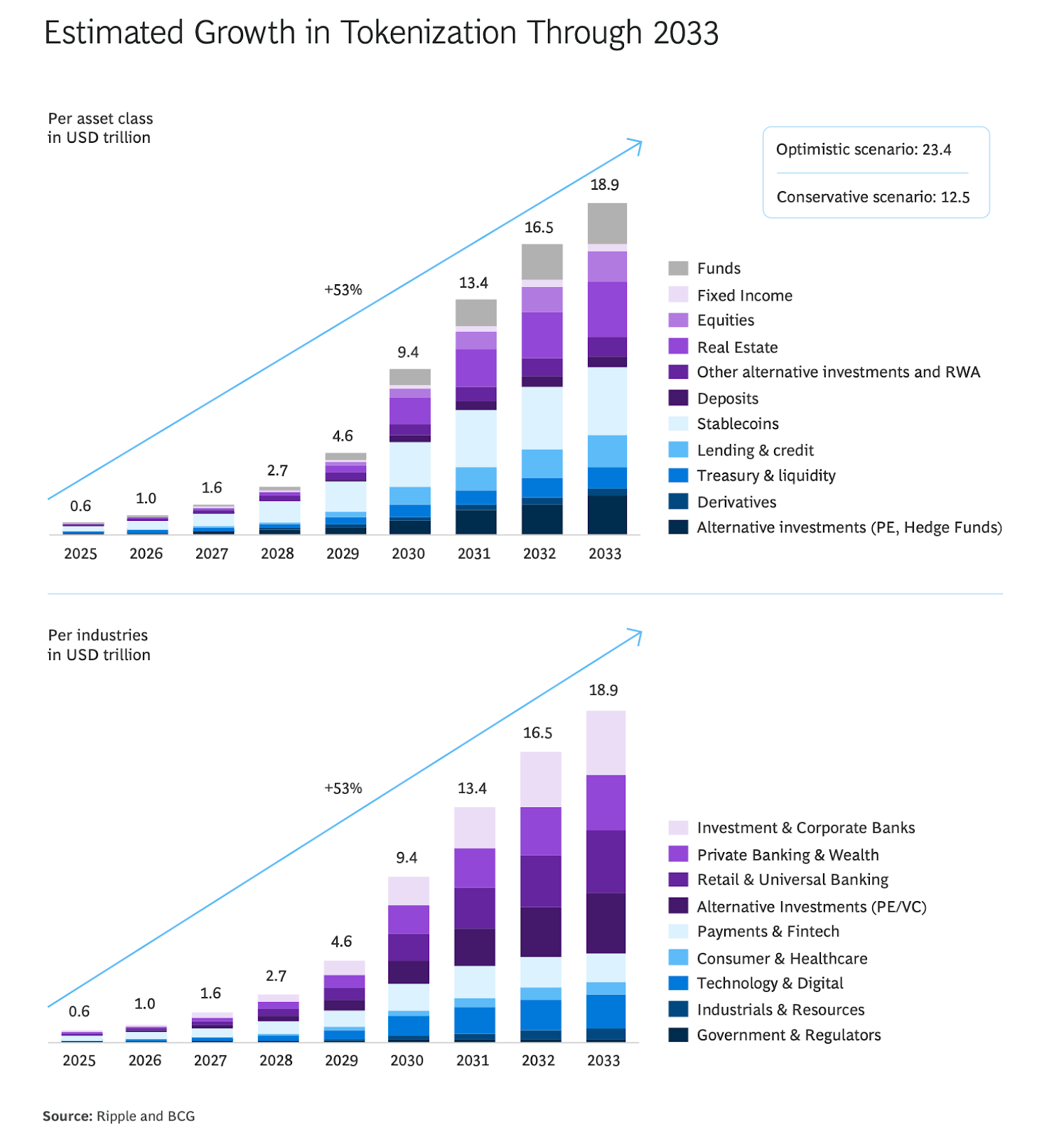
Tokenized U.S. Treasuries and real-world assets (RWAs) are shifting from experimental pilots to the core of on-chain liquidity. By placing government debt directly on the blockchain, these assets combine the stability of traditional finance with the speed of digital networks. For corporate CFOs, this transition offers a way to manage cash with near-instant settlement and 24/7 yield accessibility.
The mechanism is straightforward: a custodian holds the underlying U.S. Treasury bond, and a token representing that bond is issued on a public blockchain. This digital twin allows institutions to move value without the delays of traditional banking rails. As noted by Chainlink, these assets combine the "risk-free" yield of traditional bonds with the programmability of smart contracts [chainlink-article]. This structure enables automated interest payments and instant collateralization, turning static cash into active capital.
To understand the operational shift, compare traditional cash management with on-chain tokenized assets across key metrics.
| Metric | Traditional Cash Management | On-Chain Tokenized Assets |
|---|---|---|
| Settlement Time | T+1 or T+2 days | Near-instant (seconds/minutes) |
| Yield Access | Daily or monthly payouts | 24/7 automated accrual |
| Transparency | Private ledger statements | Public blockchain verification |
| Interoperability | Siloed banking systems | Native DeFi and corporate API integration |
This comparison highlights why tokenized treasuries are becoming essential. Traditional systems require intermediaries that slow down transactions and obscure visibility. On-chain solutions remove these frictions, allowing CFOs to see real-time liquidity and deploy capital immediately. The result is a treasury function that is not just a cost center, but a dynamic engine for yield generation.
Automating liquidity with smart contracts
The shift from manual treasury operations to automated, smart-contract-driven liquidity management marks a fundamental change in how corporations handle cash. Instead of relying on slow, batched wire transfers and manual reconciliation, CFOs can now use programmable money to execute payments and manage liquidity in real time.
Smart contracts act as the operational backbone of this transition. They encode business logic—such as payment terms, approval workflows, and compliance checks—directly into the code. When predefined conditions are met, such as the receipt of goods or a specific date, the contract automatically releases funds. This removes the latency of human intervention and reduces the risk of error or fraud inherent in manual processes.
This automation extends seamlessly to cross-border payments, where traditional banking rails often introduce significant delays and hidden fees. By settling transactions on-chain using stablecoins, corporations can move capital across borders instantly, 24/7. The transparency of the blockchain provides an immutable audit trail, simplifying reconciliation and regulatory reporting. As noted by Chainlink, this infrastructure allows on-chain treasuries to connect with enterprise systems via APIs, reflecting on-chain activity in traditional liquidity views without sacrificing speed.
To understand the liquidity instruments driving this shift, consider the current market value of the stablecoins most commonly used for corporate settlements:
The operational result is a treasury function that is no longer just a record-keeping department but an active, automated participant in global markets.
Compliance and risk management steps
Treasury compliance is not a single audit event; it is a continuous control loop. For corporate CFOs, the primary goal is to bridge the gap between immutable blockchain records and traditional regulatory reporting standards. This section outlines the operational steps to secure assets and satisfy auditors.
Avoid self-custody for operational treasuries. Partner with regulated custodians that offer Multi-Party Computation (MPC) wallets and hardware security modules (HSMs). These solutions split private keys across multiple parties, ensuring no single point of failure. Verify that the custodian provides SOC 1 Type II and SOC 2 Type II certifications, which are standard expectations for corporate audit trails.
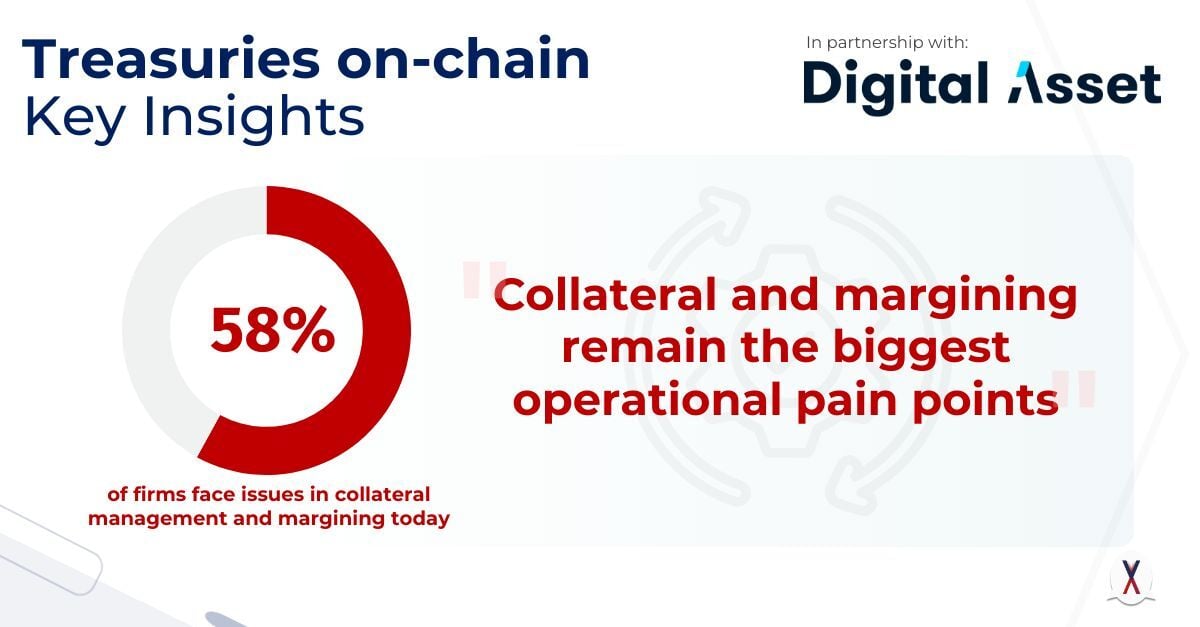
Transparency requires real-time verification. Integrate your treasury with on-chain oracles that can verify asset balances against the public ledger without exposing private keys. This allows you to generate "proof of reserves" reports that satisfy both internal risk committees and external stakeholders. Automated reporting reduces the lag between the transaction date and the audit date, minimizing window dressing risks.
Blockchain data is public, but it is not structured for GAAP or IFRS compliance out of the box. Connect your treasury management system to enterprise APIs that map on-chain transactions to traditional accounting codes. This integration ensures that every transfer, staking reward, or DeFi yield is automatically categorized for tax and financial reporting. This step prevents the manual reconciliation errors that often trigger regulatory scrutiny.
Configure multi-sig requirements based on asset value and risk profile. For example, transactions under a certain threshold might require two approvals, while larger sums require three or more, including the CFO. Define clear roles for signers to prevent unauthorized movements. This workflow creates an immutable audit trail of who approved each transaction, which is critical for demonstrating internal controls during regulatory examinations.
Frequently asked questions about on-chain treasuries
What are on-chain treasuries?
An on-chain treasury moves corporate cash management onto a public blockchain. All transactions are recorded on the ledger, providing transparency and decentralization that traditional bank ledgers cannot match. These systems connect to enterprise platforms via APIs, allowing CFOs to reflect on-chain activity in their standard liquidity views without losing visibility over core treasury operations.
What are on-chain payments?
On-chain payments are transactions validated, recorded, and agreed upon by the main blockchain network, distinct from off-chain ledger entries. For example, when a user transfers Bitcoin via the main network, the transfer is settled directly on the blockchain. This direct settlement reduces reliance on intermediary clearinghouses and can accelerate finality for cross-border corporate payments.
What is an on-chain fund?
An on-chain fund uses smart contracts and oracles to automate asset allocation, trade execution, and reporting. This model replaces traditional intermediaries with decentralized infrastructure, aiming to increase transparency and efficiency in capital formation. For corporate treasuries, this structure can streamline yield generation strategies by automating complex rebalancing tasks that would otherwise require manual intervention.
What is on-chain used for?
Beyond simple payments, on-chain technology is used for real-time auditability, programmable cash management, and automated compliance. CFOs leverage these capabilities to manage digital assets alongside traditional fiat, ensuring that every movement of capital is immutable and instantly reconcilable within the company’s financial reporting systems.
Helpful gear
Use these product recommendations as a starting point, then choose the size, material, and price point that fit how you actually use the gear.



As an Amazon Associate, we may earn from qualifying purchases.
No comments yet. Be the first to share your thoughts!