


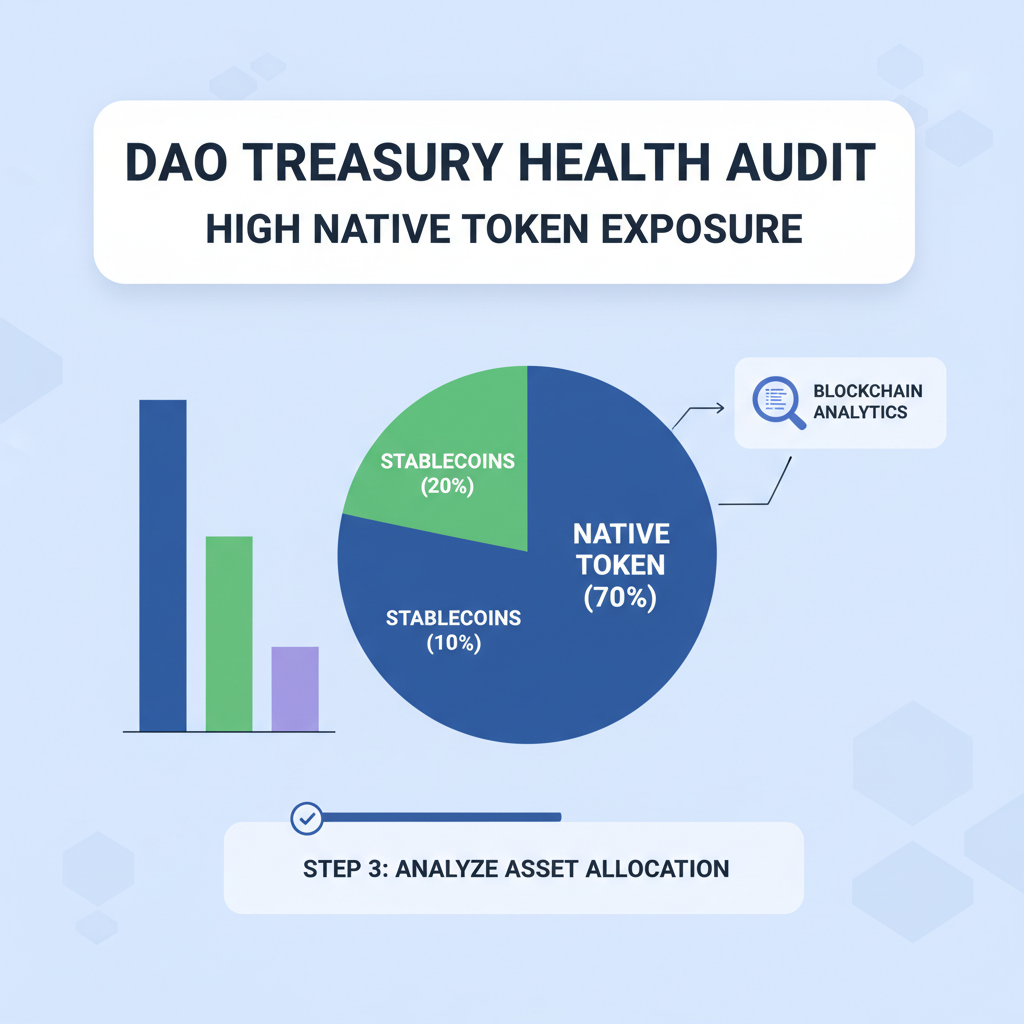
Decentralized Autonomous Organizations (DAOs) promise decentralized governance and community-driven decisions, yet most cling to a precarious treasury strategy: parking over 85% of their funds in a single asset, usually their native token. A 2023 Blockchain Research Lab study pegs this figure at 81.7%, close enough to underscore the norm. This overexposure leaves treasuries swinging wildly with token prices, turning what should be stable war chests into volatility bombs.


Why does this persist? Native tokens align incentives, bootstrapping liquidity and rewarding early holders. But as DAOs mature, this setup backfires. Top five DAOs control over 60% of all treasury assets, per PatentPC data, amplifying systemic risks when their dominant holdings tank. Sushi DAO learned this firsthand, diversifying into stablecoins and blue-chips to curb volatility, as noted by OneSafe. BitDAO spreads across 41% BIT, 27% ETH, and 23% stablecoins, dodging total wipeouts during crashes like the 70% drawdowns Coinchange references.
The Perils of Single-Asset Concentration Exposed
Picture a DAO treasury bloated with its governance token. When sentiment sours, value evaporates overnight. Native tokens lack the pegged stability of fiat equivalents, exposing DAOs to crypto’s brutal cycles. Request Finance highlights how undiversified holdings amplify downside: no staking yields on idle tokens, missed DeFi opportunities, and governance stalls amid panic sells.
Riseworks pushes blockchain treasuries with diversification as the baseline fix. Yet inertia rules; many operators fear complexity or yield dilution. Reality check: concentration isn’t loyalty, it’s liability. Medium’s Andrea Armanni spotlights staking ETH or stablecoins for wrapped yields like weETH or eUSD, preserving capital while compounding returns. J. P. Morgan notes stablecoins’ role in allocation, though diversification never guarantees profits.
Decoding the Stats: Top DAOs’ Treasury Breakdown
| DAO | Top Asset % | Stablecoins % | Total Treasury Value |
|---|---|---|---|
| Top 1-5 Aggregate | ~85% | and lt;15% | 60% of all DAO assets |
| Sushi DAO | Native Token | Increasing | Diversified post-volatility |
| BitDAO | 41% BIT | 23% | Multi-asset resilience |
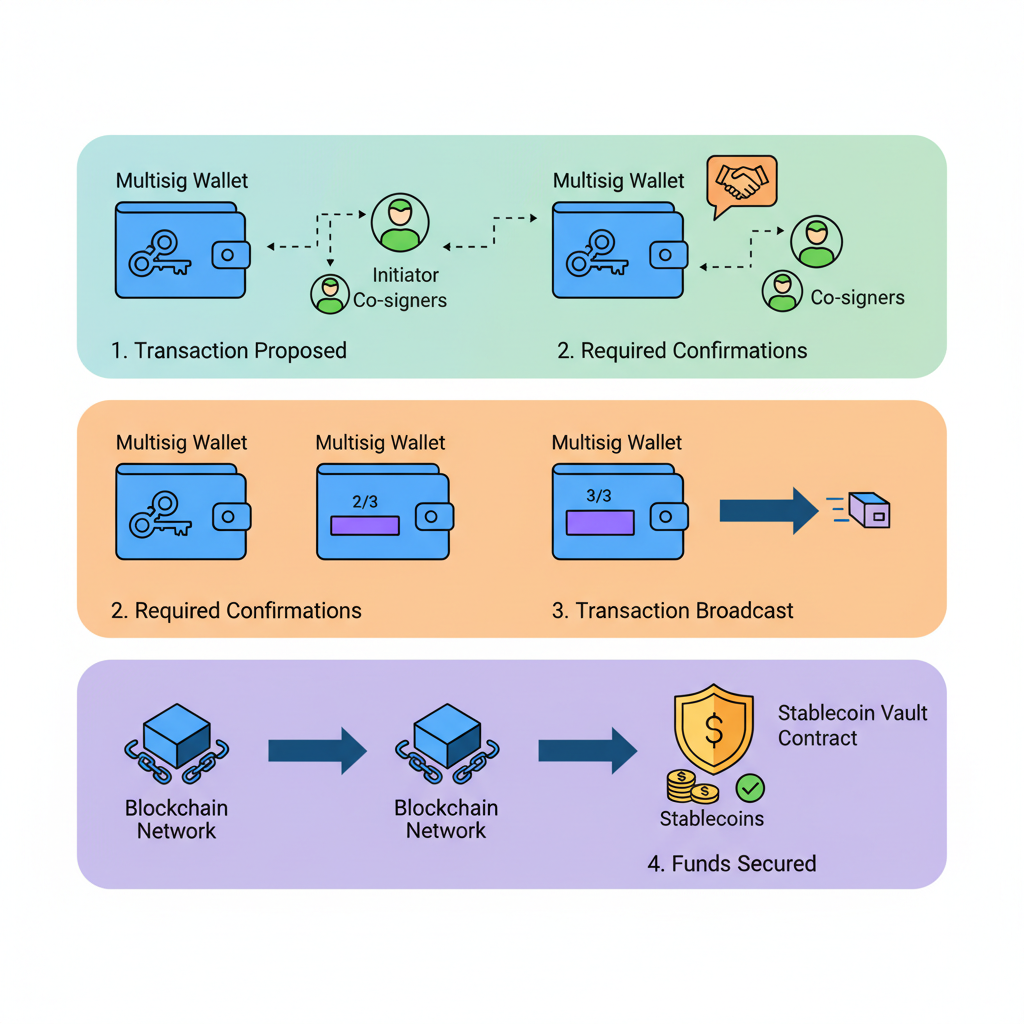
This table distills the disparity. Concentration dominates, but outliers like BitDAO thrive on spreads. Metana’s guide stresses security principles: multisig wallets alone won’t save a mono-asset pile from 50% drops.
Stablecoin Vaults Enter the Chat: Precision Diversification
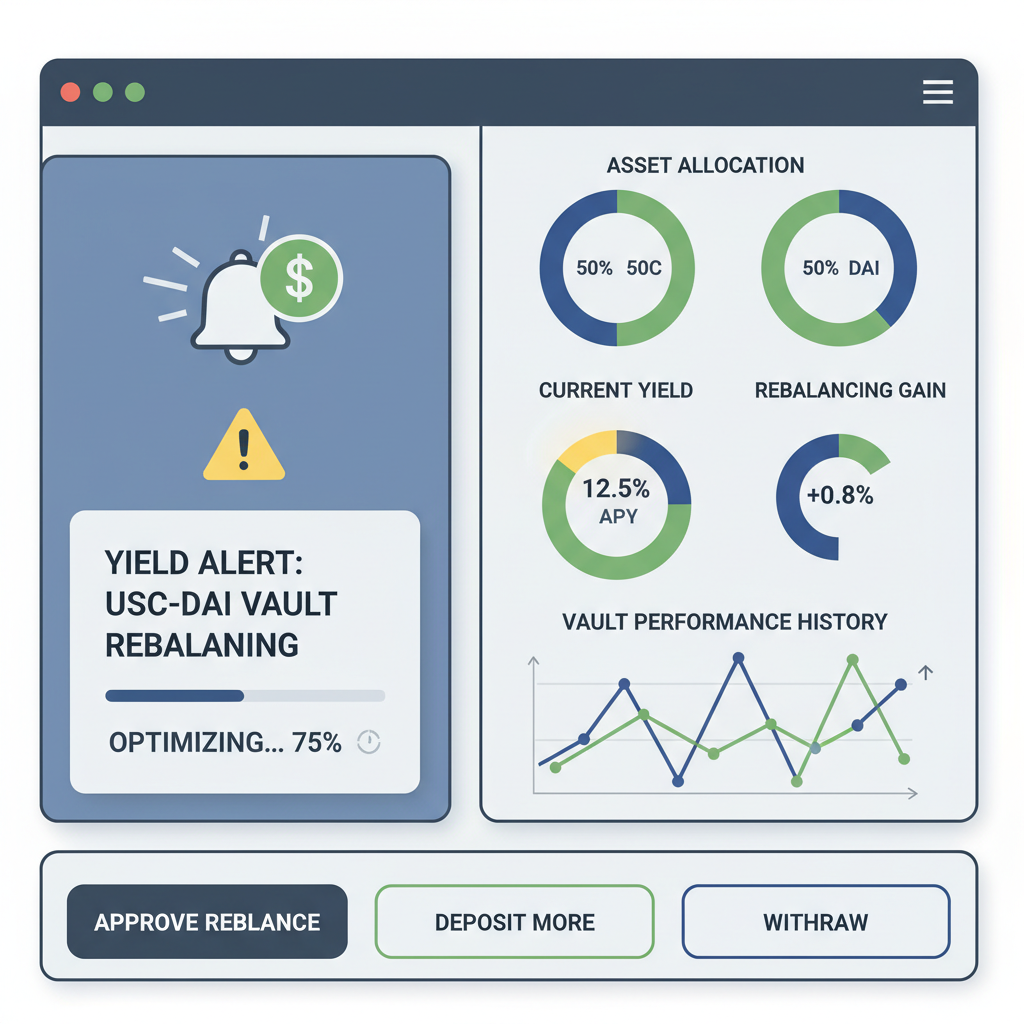
Enter stablecoin vaults, the on-chain antidote. Platforms like Aera dynamically allocate across USDC, DAI, USDT, chasing top lending yields while auto-rebalancing. CryptoTreasuryStocks. com details how this slashes volatility exposure, targeting 5-10% APYs with minimal risk. No more native token roulette; vaults peg to dollar stability, freeing operators for governance over firefighting.
These vaults don’t just park funds; they actively optimize. By splitting allocations across USDC, DAI, and USDT, DAOs capture the best yields from protocols like Morpho or Compound, often exceeding 6% APY in low-vol environments. Aera’s smart contracts handle rebalancing, dodging black swan dips in any one stablecoin.
Comparison of Top Stablecoin Vaults for DAO Treasuries
| Vault | Primary Strategy | Yield (APY) | Fee Structure | Key Benefits for DAOs |
|---|---|---|---|---|
| Aera | Dynamic allocation across stablecoins (USDC, DAI, USDT) and lending protocols | 5-10% | Competitive | Optimizes returns, manages risk, enhances stability |
| Yearn | Auto-compounding | Variable (DeFi yields) | Low fees | Sustainable passive income, hands-off management |
| Convex | Boosted rewards | Enhanced (boosted base yields) | Low | RWA integration (e.g., tokenized U.S. Treasuries), diversification |
Tokenized U. S. Treasuries supercharge this setup. Platforms bundle T-bills into on-chain vaults, yielding 4-5% with zero credit risk. OnChainTreasury. org outlines how DAOs layer these RWAs atop stablecoins, blending TradFi safety with DeFi liquidity. No counterparty worries, full transparency via blockchain explorers.
Real-World Wins: DAOs That Diversified Early
Sushi DAO’s pivot slashed volatility by 40%, per OneSafe reports, stabilizing payouts and governance. BitDAO’s 23% stablecoin slice buffered 70% native token crashes, as Coinchange data shows. Request Finance advocates spreading across staking, lending, and stables for compounded returns. Even U. S. Treasury trends echo this: countercyclical assets like bills diversify risky bets.
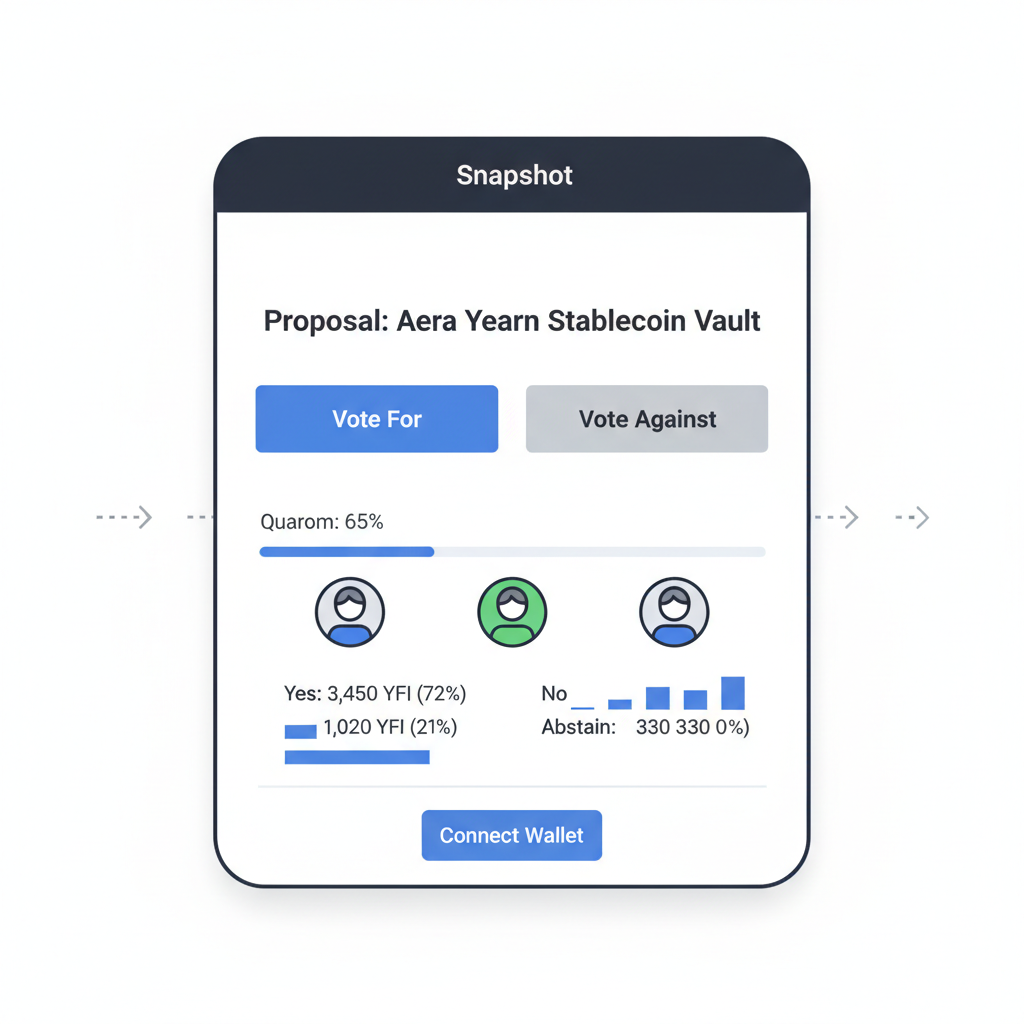
Blockchain App Factory’s stablecoin DAO guide stresses governance tweaks: propose vaults via snapshot, execute via Gnosis Safe. Metana adds multisig thresholds and oracle feeds for trustless ops. The result? Treasuries that grow, not gamble.
Actionable Path Forward: Deploy Stablecoin Vaults Today
Operators face a clear fork: cling to 85% single-asset traps or vault up. Diversification isn’t optional; it’s survival in 2026’s choppy DeFi seas.
5 Steps to Secure DAO Treasuries with Stablecoin Vaults
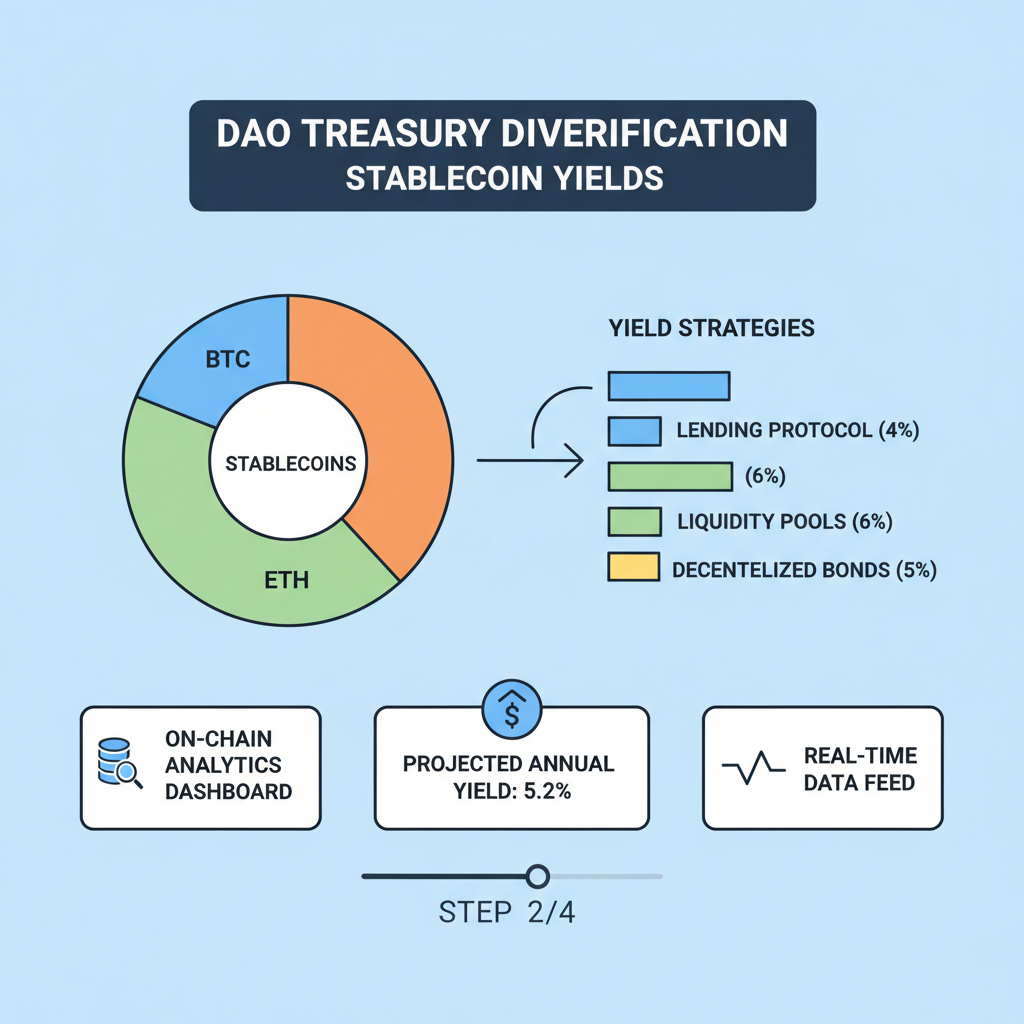
Riseworks nails it: blockchain treasuries thrive on risk mitigation. Stake stables for eUSD yields, per Andrea Armanni, or RWA-stack for principal protection. J. P. Morgan demystifies stablecoins’ peg mechanics, but on-chain vaults add automation DAOs crave.
Top DAOs hoard 60% of assets; their moves set precedents. When leaders vault stables, laggards follow. Vaults crush single-asset risks with volatility shields and yield engines. Andrea’s DeFipunk ethos fits: stake smart, not hard.
PatentPC’s growth stats scream urgency: treasury bloat demands efficiency. Launch with Blockchain App Factory’s blueprint or retrofit existing ops. Either way, stablecoin vaults deliver DAO treasury diversification 2026 style: automated, transparent, resilient. Ride the stability trend; respect the single-asset ghosts.
About the Author